3D Rugs and Sculpted Pile: The Tactile Design Trend Redefining Floors in 2026
The rug used to finish a room. Now it starts one. 3D rugs and sculpted piles are bringing real depth and tactile texture to interiors, from hand knotted relief patterns to optical illusion designs that stop you mid-step. This is what the trend is, why it matters, and how to buy it well.
There is a shift happening in how people think about floors.
For years, the rug was a supporting player. Something to anchor the furniture, add warmth, maybe introduce a bit of color. The room was the thing. The rug was just there.
That is changing. In 2026, the rug is increasingly the starting point of a room, not the finishing touch. And at the center of that shift is a category that is growing faster than most: 3D rugs and sculpted piles.
What Makes a Rug “3D”?
The term gets used loosely, so it helps to understand what it actually means.
A 3D rug creates the effect of depth or dimension, either physically or visually. There are two ways this happens, and they are quite different.
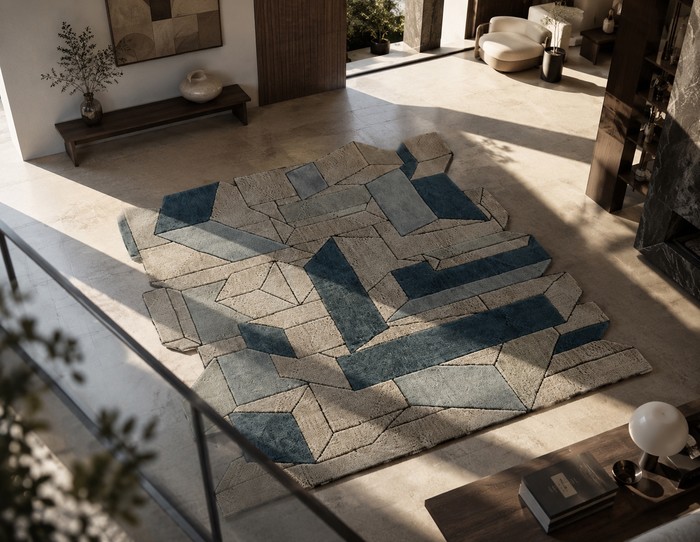
The first is a sculpted pile. This is a weaving and finishing technique where pile height is deliberately varied across the surface of the rug. Some areas are cut higher, some lower, and the contrast between them creates grooves, ridges, and relief patterns you can actually feel with your hand. The design is not just printed on the surface. It is built into the construction.
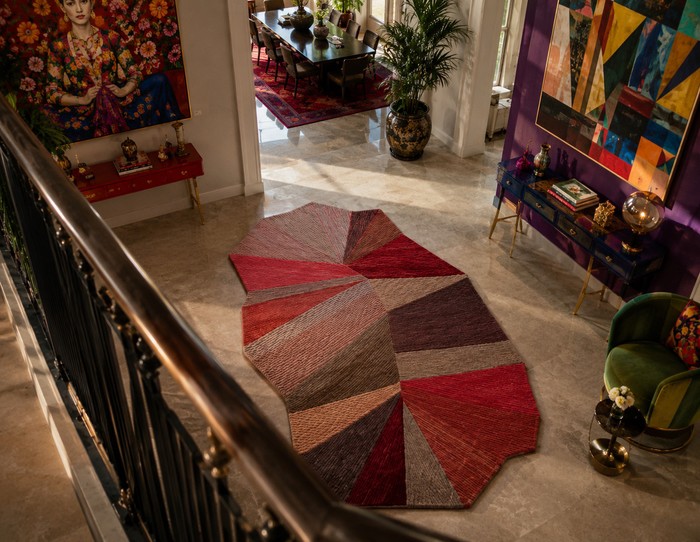
The second is the 3D optical illusion rug. These are flat. The pile height does not change. But the pattern, usually geometric, uses perspective, contrast, and color gradation so carefully that the eye reads depth where there is none. A well-executed illusion rug can make a flat floor appear to curve, drop, or fold.
Both are genuinely compelling. They just do different things in a space.
Why This Trend Is Hitting Hard Right Now
Interiors have been very flat for a long time. Clean lines, neutral palettes, surfaces that do not ask too much of you. That aesthetic has its place, but after a decade of it, many designers and homeowners are hungry for something that feels more alive.
Tactile texture in interior design is the answer many of them are landing on. Not maximalism for its own sake, but a considered layering of materials, surfaces, and finishes that makes a room feel genuinely sensory. Something you want to touch, not just photograph.
The floor is the largest surface in any room. It made sense that eventually the conversation would arrive here.
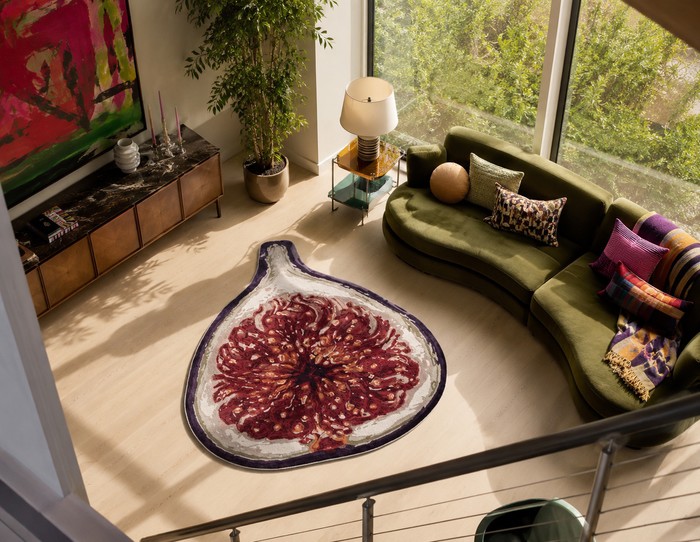
There is also something worth noting about how people shop for interiors today. AI-generated room visuals have raised the baseline for what looks good. Everyone has seen a beautifully styled room. The pieces that actually stop the scroll, and the ones that hold up in person, are the ones with real physical character. A sculpted pile rug has that. A flat rug, however beautiful, increasingly has to work harder to compete.
Sculpted Pile: Where Craft and Design Converge
We have been making sculpted pile carpet for centuries. It is not a new technique. What is new is how contemporary design is using it.
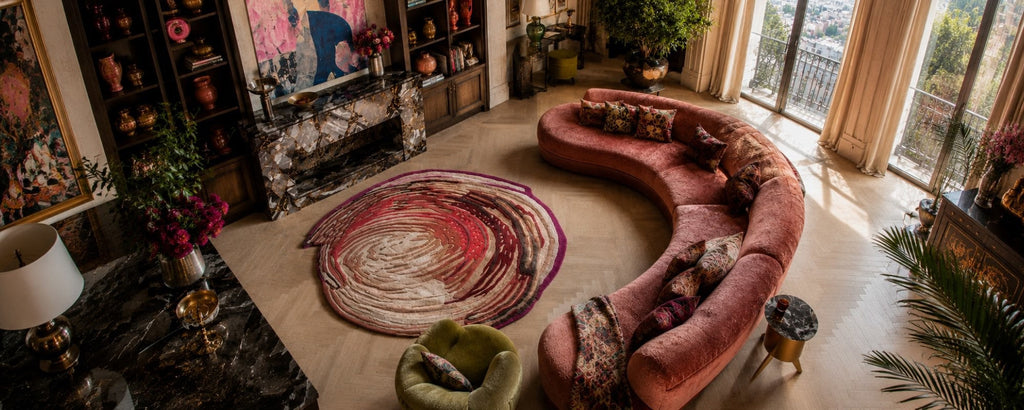
The traditional application was decorative, with floral motifs carved into the pile to add dimension to a classical pattern. What is happening now is different. Designers are using the technique as the design itself. Abstract relief patterns. Architectural geometry. Surfaces that reference stone, water, topography, and geological cross-sections.
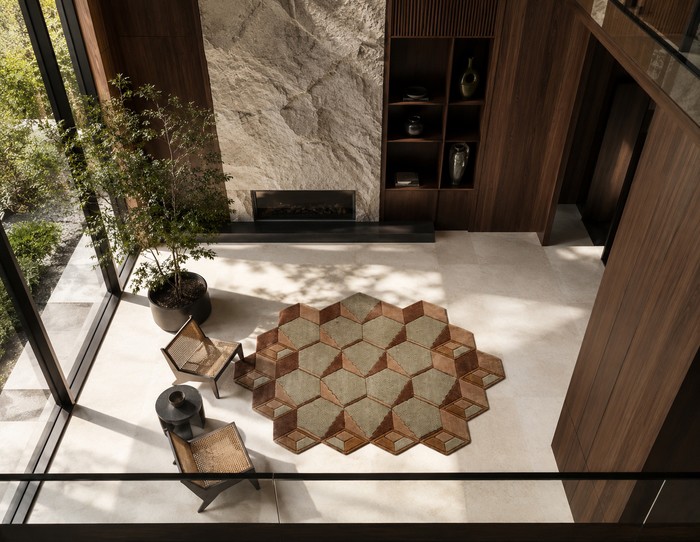
The craft behind this matters. The best sculpted pile rugs today come from hand knotted construction, where artisans control the pile height with a precision that is impossible to achieve mechanically.
At Jaipur Rugs, this process does not happen in a factory. It happens in homes across Rajasthan, in the hands of weavers who have spent years developing the sensitivity to make these decisions knot by knot.
That process is what gives a sculpted rug its quality. You can see it. More importantly, you can feel it.
3D Optical Illusion Rugs: Flat Surface, Maximum Impact
If a sculpted pile is about what a rug feels like, optical illusion rugs are about what they do to a room visually.
A well-designed 3D illusion rug plays with your perception in ways that are hard to ignore. Geometric patterns arranged in precise gradients can make a flat floor look like it has depth, movement, or structure. Some of the most striking examples look almost architectural, like a section of a building seen from above.
These work best in rooms with strong bones. A contemporary interior with clean walls and minimal furniture gives the illusion of room to read. Add too much visual noise around it, and the effect gets lost.
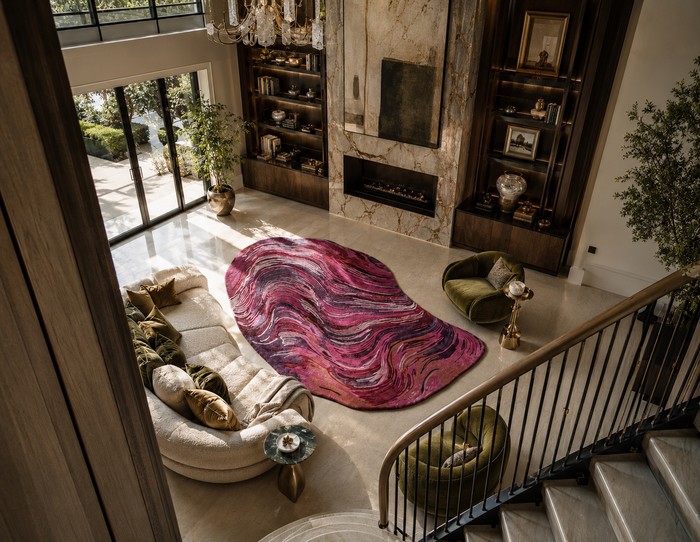
In terms of construction, many 3D illusion rugs are produced as hand-tufted rugs, which allows for the tight color control these designs demand. The gradient shifts and tonal precision that make the illusion work require a construction method that does not leave those decisions to chance.
Material: Where the Difference Is Made
The material a 3D rug is made from affects everything. How it looks, how it feels, how long it lasts, and how the sculpted design actually reads in the room.
Wool is the foundation. It maintains its pile structure over time, responds well to carving, and has a natural warmth of color that synthetic fibers cannot quite replicate. Wool rugs in sculpted construction are the benchmark for a reason. The pile stays where it is supposed to. The grooves and ridges hold their shape through years of use.
Silk changes the equation when you introduce it alongside wool. Silk pile reflects light differently than wool, so in a sculpted design, the two materials create a visual texture on top of the physical one. A ridge in wool reads one way. The same ridge in silk catches light and reads completely differently. Some of our most sophisticated 3D pieces use this contrast deliberately.
For buyers who need durability above everything else, a tightly constructed wool rug is the right answer. For a bedroom or a formal sitting room where the piece will be treated with care, a wool-and-silk blend opens up possibilities worth exploring.
Placing a 3D Rug: Room by Room
Living Room
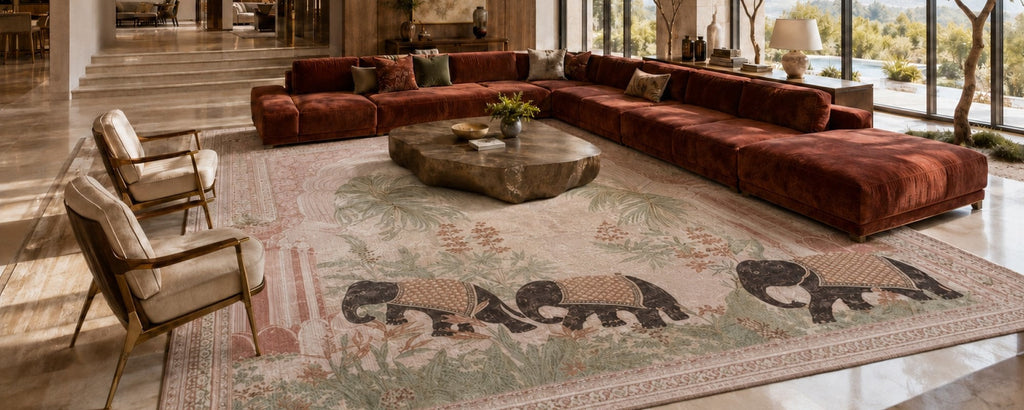
The living room is where a 3D rug has the most to gain and the most to prove. A large-format sculptural piece under a seating arrangement can define the entire character of a room. It does not need much else to compete with. The texture, the relief, the way it shifts in appearance as natural light moves through the day. These things work on their own.
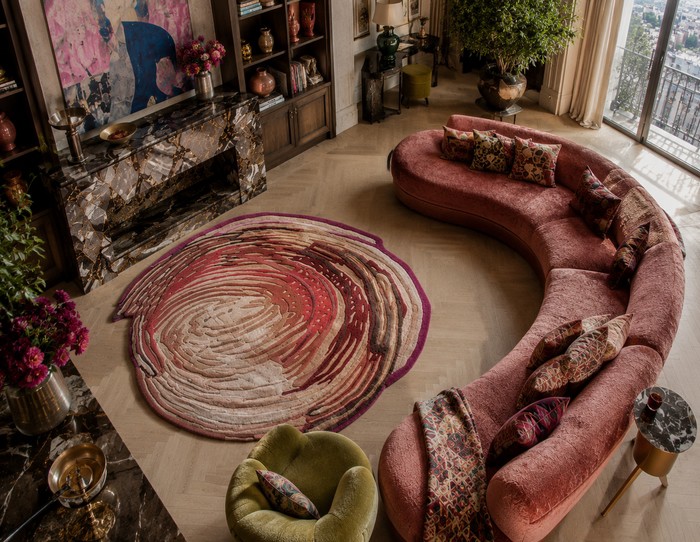
A textured area rug in a living room also performs a practical function. It adds acoustic warmth to spaces with hard floors and high ceilings, which is increasingly common in contemporary homes. That is worth knowing if you are designing for those conditions.
Bedroom
3D rugs for bedroom spaces are growing in popularity, and the reason is simple. The bedroom is the one room where you experience a rug with bare feet every day. Texture underfoot is a different kind of luxury than the texture you see from across the room.
A sculpted pile rug beside the bed, placed just where your feet land first thing in the morning, is one of those small decisions that quietly improve daily life. Neutral rugs work well here. Gray rugs with geometric relief patterns, or warm tone pieces with wave-cut piles, add dimension without asking the room to do too much.
Entryways
An entryway is a room that most people underinvest in. It is also the first thing anyone sees when they walk into your home. A 3D rug here, even a smaller one, communicates that the interior has been thought about. Round rugs work particularly well in entry foyers with a circular or square footprint. The shape makes sense architecturally, and a sculptural round piece reads as intentional rather than decorative.
Statement Spaces
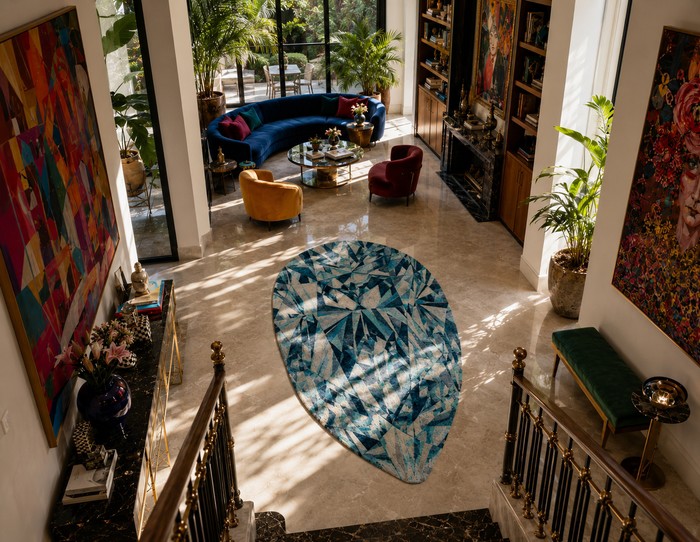
Some rooms call for one strong move. A 3D optical-illusion rug on a marble or limestone floor in a double-height entrance hall or gallery space can function much like a large painting on a wall. It is the thing the room is organized around.
Color in a 3D Rug: It Works Differently Than You Think
Color behaves differently in a sculpted rug than in a flat one. This is one of the things that makes the category genuinely interesting to design with.
In a flat rug, the color you see is the color you get. In a sculpted pile rug, light creates shadow and highlights across the relief surface. The same color appears lighter on raised areas and deeper in recesses. A single tone becomes a range. A two-color design becomes something more complex.
This means the color you choose for a sculpted rug should be considered in the context of your lighting, not just your palette. A piece that looks one way in a showroom under fixed overhead light will look different in a south-facing room with strong afternoon sun. That is not a drawback. It is part of what makes these rugs feel like they live in a room rather than just sit in it.
Some directions that are working particularly well right now:
-
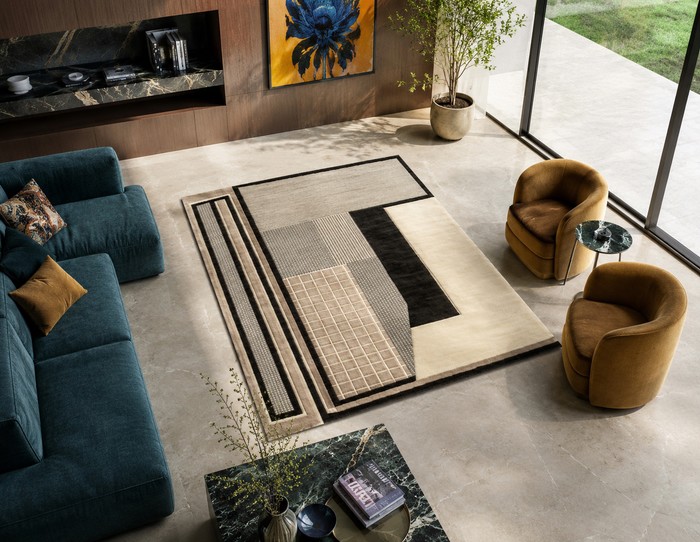
Earthy tones with physical texture. Sand, warm stone, and dusty taupe in sculpted construction. The texture does the work, and the color stays quiet. These sit easily with natural materials, wood, linen, and ceramic, without competing.
-
Jewel tones in a sculpted pile. Blue rugs, green rugs, and pink rugs in a carved construction have a depth that flat versions of the same colors do not. The pile holds the color differently, and it reads as richer.
-
High-contrast relief. Black rugs with cream or warm-white sculpted details create something close to an architectural drawing. Strong, graphic, and surprisingly versatile.
-
Warm and saturated. Orange rugs and yellow rugs in textured constructions are landing well in eclectic and maximalist spaces. Against dark walls or layered with patterns, they hold their own.
3D and Traditional: Not Opposites
It is worth saying this clearly, because the question comes up. A 3D or sculpted rug is not the opposite of a traditional rug. The two categories have more overlap than most people expect.
Some of the most interesting pieces being made today take traditional motifs, the medallion, the border, the repeating geometric, and build them in a sculpted pile. The pattern is recognizable. The construction gives it a physical dimension that a flat-woven version could never achieve. The result is a piece that carries history and feels entirely current.